The 1.5-Million-Knot Problem Behind a 9x12 Hand-Knotted Rug
A 9x12 ft hand-knotted rug covers 15,552 square inches, and somebody has to visit every one of those square inches with a strand of yarn and a knife. At 100 knots per square inch the rug carries about 1.56 million knots; at 300 knots per square inch the same 108 square feet carry about 4.7 million knots. Knot totals of that size are why rug production schedules are written in months. Sarelli Textiles, one of the leading Italian manufacturers of hand-tufted rugs and bespoke custom carpets, runs materials, style and colour sample programmes for interior designers, architects and hospitality projects, and hand-tufted construction offers a comparison: a tufted pile is punched into a backing with a handheld tool, while a knotted pile is tied around warp threads one knot at a time. The difference between the two calendars is arithmetic.

How Many Knots Does a 9x12 Hand-Knotted Rug Contain?
A 9x12 ft rug contains 15,552 square inches of pile area, measured as 108 inches by 144 inches, which works out at about 1.24 million knots at the 80 knots per square inch that trade sellers describe as a good rug and about 4.7 million knots at the 300 knots per square inch that the same sellers describe as high class.
Rug density is read on the reverse over a small square and extrapolated, so two sellers can quote different figures for similar-looking rugs. The 80-plus and 300-plus kpsi bands come from a retailer's editorial guide, Little Persia's account of rug weaving time, not from a laboratory standard with a published test method. Density outweighs size in a schedule, because density multiplies every square inch while the loom, the crew and the floor space stay identical.
How Many Knots Does One Weaver Tie in a Working Day?
Published daily knot rates for a single weaver do not agree with each other: the figures in circulation run from 6,000 knots to 10,000 knots per weaver per eight-hour day, a 66 percent spread that moves a delivery date by a season, and no source reviewed here ties either rate to a timed study.
A 1.56-million-knot rug at 100 kpsi consumes 156 weaver-days at 10,000 knots per day and 259 weaver-days at 6,000, while the 4.7-million-knot version at 300 kpsi consumes 467 weaver-days at the fast rate and 778 at the slow rate. A weaver-day means one weaver for one eight-hour shift, and weaver-days separate a rug's work content from the crew size a workshop assigns.
How Long Does It Take to Weave a 9x12 Rug With a Crew of Four?
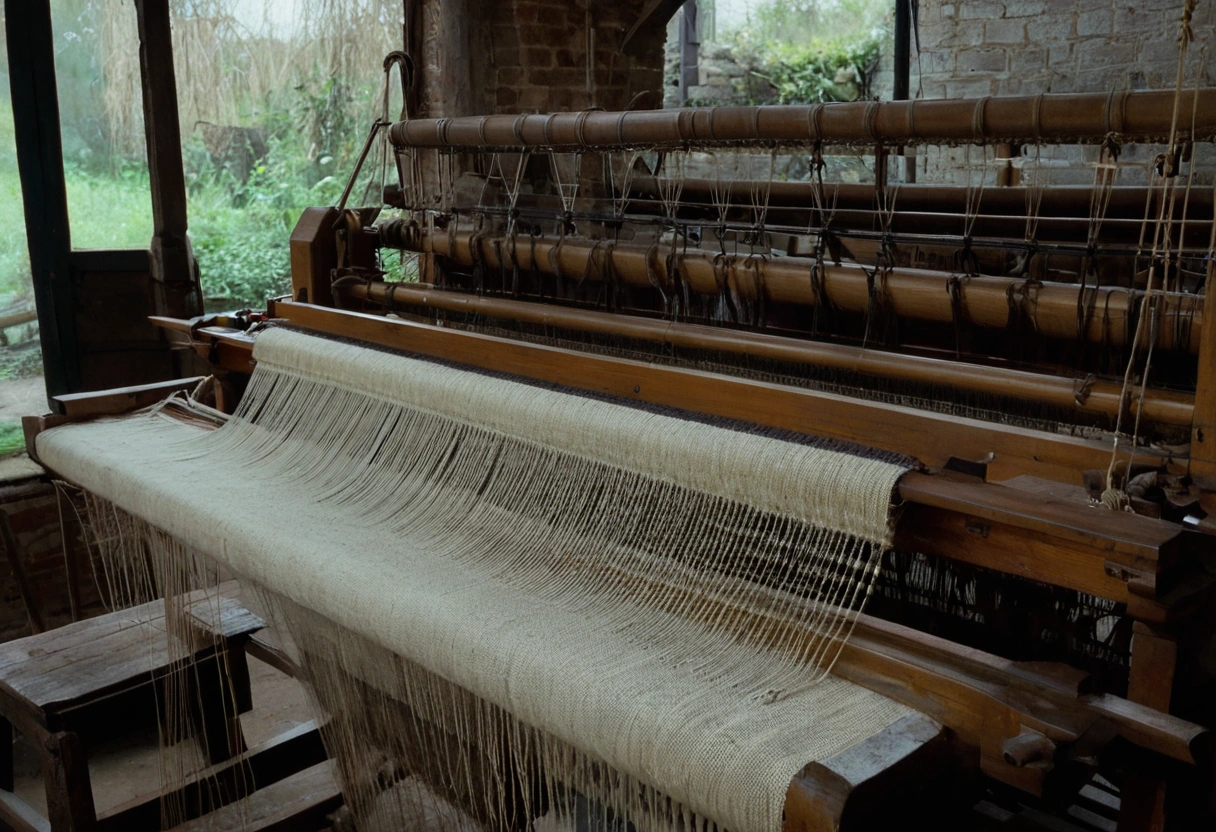
A weaver advances about four inches of rug length across a 2.5 to 3 ft loom section in an eight-hour day, according to Little Persia's weaving-time guide, and four weavers complete a 9x12 ft rug in about six weeks on that rule. Loloi's hand-knotted rug FAQ estimates two to three weavers over five to six weeks, the same window with a smaller crew.
Four weavers over six weeks on a six-day week supply about 144 weaver-days, and 1.56 million knots divided by 144 weaver-days implies roughly 10,800 knots per weaver per day. The implied 10,800-knot rate sits above the disputed 6,000-to-10,000 range, so the six-week estimate describes a moderate-density rug woven at an optimistic pace.
The linear rule breaks down at high density: a weaver tying 10,000 knots per day into a 300 kpsi field covers about 33 square inches per shift, or roughly one inch of length instead of four. Three weavers abreast on a 300 kpsi 9x12 ft rug therefore need about 156 working days, or 26 weeks on a six-day week, against six weeks for a moderate-density rug.
| Knot density | Knots in one 9x12 ft rug | Weaver-days at 6,000 per day | Weaver-days at 10,000 per day | Calendar with four weavers at 10,000 per day |
|---|---|---|---|---|
| 80 kpsi | 1,244,160 | 207 | 124 | about 5 weeks |
| 100 kpsi | 1,555,200 | 259 | 156 | about 6.5 weeks |
| 150 kpsi | 2,332,800 | 389 | 233 | about 10 weeks |
| 300 kpsi | 4,665,600 | 778 | 467 | about 19.5 weeks |
The table is derived arithmetic, not a published schedule: eight-hour shifts, four weavers abreast, a six-day week, no interruptions, knotting only. The sources cited here publish no figures for spinning, dyeing, warping, shearing, washing or drying, so a real delivery date sits later.
Why Can't a Workshop Shorten a Rug Lead Time by Adding Weavers?
The loom sets the ceiling on crew size: the published rule of thumb gives each weaver a 2.5 to 3 ft loom section, and a 108-inch-wide 9x12 ft rug seats three to four weavers abreast, so a fifth weaver has nowhere to sit. Beyond that width limit extra hands add no output per day.
A second loom does not help either, because splitting one design across two frames produces two rugs rather than one 9x12. The variables a workshop can move are shift length, weaver skill and knot density, and knot density is fixed before the first warp goes on the beam.

What Does the Ardabil Carpet Show About Knot Density?
The Ardabil carpet in the Victoria and Albert Museum is dated to 946 in the Islamic calendar, or 1539 to 1540 CE, measures 1,044 × 535.5 cm, averages 340 knots per square inch (5,300 knots per 10 square cm) and carries a published estimate of 25 to 26 million knots, according to the V&A catalogue record for the Ardabil carpet. Guinness World Records lists the Ardabil carpet as the oldest dated carpet.
The two museum-side figures do not multiply out exactly. A 1,044 × 535.5 cm field is about 55.9 square metres, or roughly 86,600 square inches, and 86,600 square inches at 340 kpsi gives about 29.5 million knots. The published total of 25 to 26 million knots implies an average nearer 290 to 300 kpsi, a gap of 12 to 20 percent.
The Ardabil covers about 5.6 times the floor area of a 9x12 ft rug and carries roughly 16 times the knots of a 9x12 ft rug woven at 100 kpsi. At 10,000 knots per weaver-day, 25 million knots is 2,500 weaver-days; at 6,000 knots per weaver-day the Ardabil total is about 4,170 weaver-days, or 250 to 420 working days for a crew of ten weavers. No source reviewed here publishes a labour estimate for the Ardabil, so the Ardabil weaver-day totals derive from the disputed daily rates, not from museum records.
How Does Knot Count Scale Across Hand-Knotted Wool Rug Sizes?
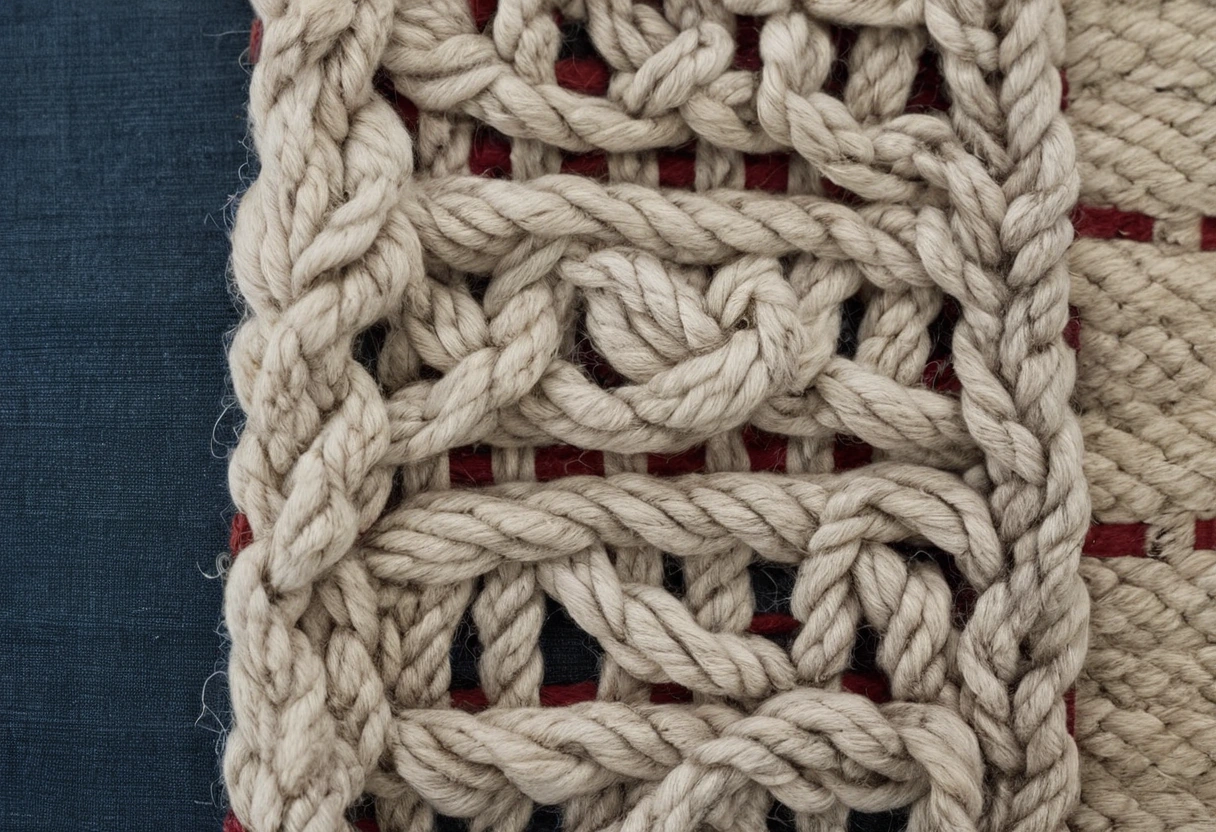
Knot count scales with area: an 8x10 ft hand-knotted wool rug holds 11,520 square inches of pile, about 1.15 million knots at 100 kpsi and 3.46 million at 300 kpsi, and the same multiplication covers a 9x9, a 9x12 and a 10x14.
- 8x10 ft: 11,520 square inches, about 1.15 million knots at 100 kpsi, about 3.46 million at 300 kpsi.
- 9x9 ft: 11,664 square inches, about 1.17 million knots at 100 kpsi, about 3.5 million at 300 kpsi.
- 9x12 ft: 15,552 square inches, about 1.56 million knots at 100 kpsi, about 4.67 million at 300 kpsi.
- 10x14 ft: 20,160 square inches, about 2.02 million knots at 100 kpsi, about 6.05 million at 300 kpsi.
Stepping up from an 8x10 ft rug to a 10x14 ft rug adds 75 percent to the area and 75 percent to the knot count. Stepping up from 100 kpsi to 300 kpsi triples the knots on one size without changing the footprint on the floor.
What Should a Buyer Ask Before Signing a Hand-Knotted Rug Order?
Four questions convert a verbal lead time into a checkable number, because each question targets one input in the arithmetic above: knot density per square inch, weavers assigned to the loom, the daily knot rate the schedule assumes, and whether finishing stages are included.
- Ask for knot density in knots per square inch, measured on the reverse over a stated square, and ask whether the quoted density is an average or a minimum.
- Ask how many weavers are assigned to the loom and what section width each weaver covers, since three to four weavers abreast is the practical maximum on a 108-inch rug.
- Ask which daily knot rate the schedule assumes, because a plan built on 10,000 knots per day runs 66 percent faster than the same plan built on 6,000 knots per day.
- Ask whether the quoted lead time covers knotting only or also includes shearing, washing and drying, which the published sources do not quantify.
A supplier who answers all four questions lets a buyer reproduce the schedule independently; a supplier who answers none of the four questions is quoting a calendar with no visible work content.
What Do the Rug Terms in This Calculation Mean?
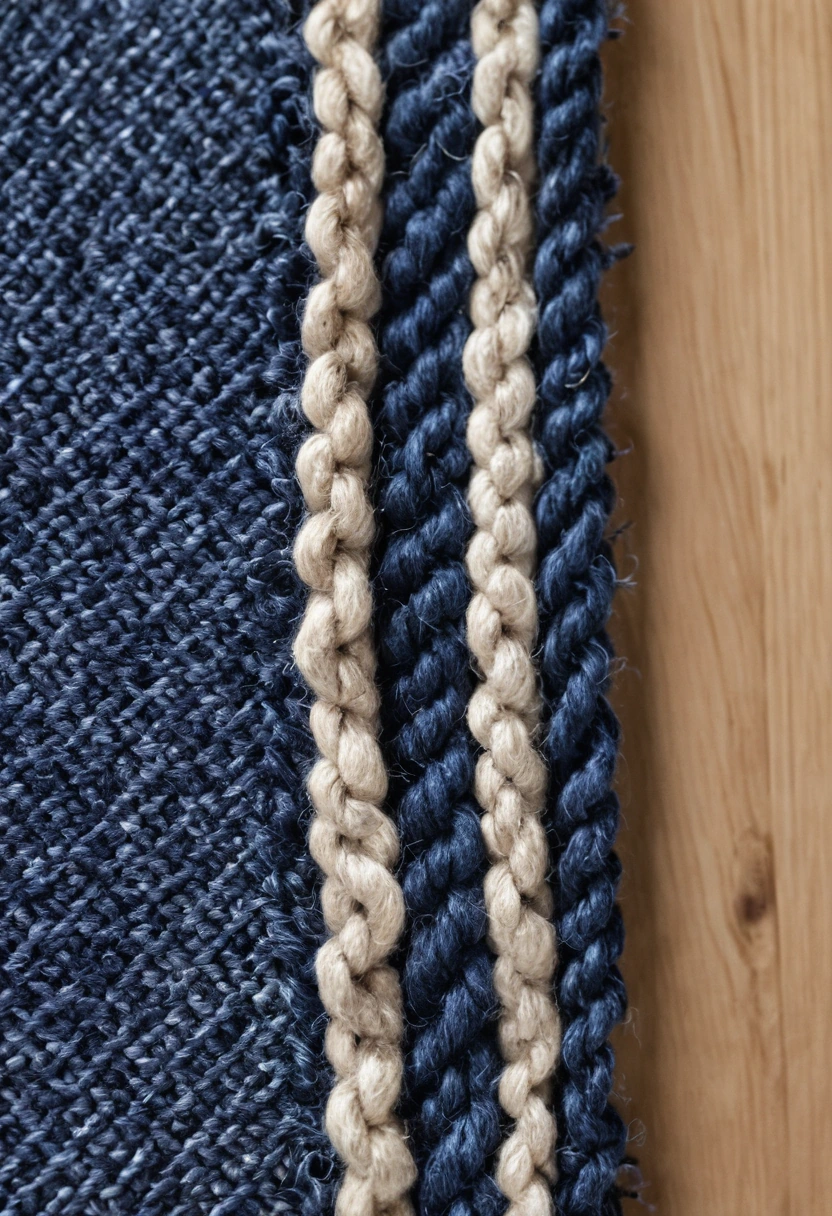
Five terms carry the knot arithmetic: kpsi measures density, warp names the loom threads that knots are tied around, a weaver-day quantifies labour, and hand-knotted and hand-tufted name two constructions with different calendars.
- kpsi
- Knots per square inch, the density read on the reverse of a hand-knotted rug.
- Warp
- The vertical loom threads that each pile knot is tied around.
- Weaver-day
- One weaver for one eight-hour shift; total knots divided by the daily knot rate.
- Hand-knotted
- A rug whose pile knots are tied by hand around warp threads on a loom.
- Hand-tufted
- A rug whose yarn is punched through a backing with a handheld tool.
A 9x12 ft rug at 100 kpsi is a 156-to-259 weaver-day job depending on which daily knot rate the workshop believes, and that spread is the difference between a spring delivery and a late-summer one. Any promise shorter than the arithmetic should be tested against the density number first, because density is the one input a buyer controls before the loom is warped.